
Advance Tax Calculation: 7 Smart Steps to Save Big in 2026
A straightforward, human take on advance tax calculation — who pays it, when it's due, and how to work out the numbers without losing your mind.
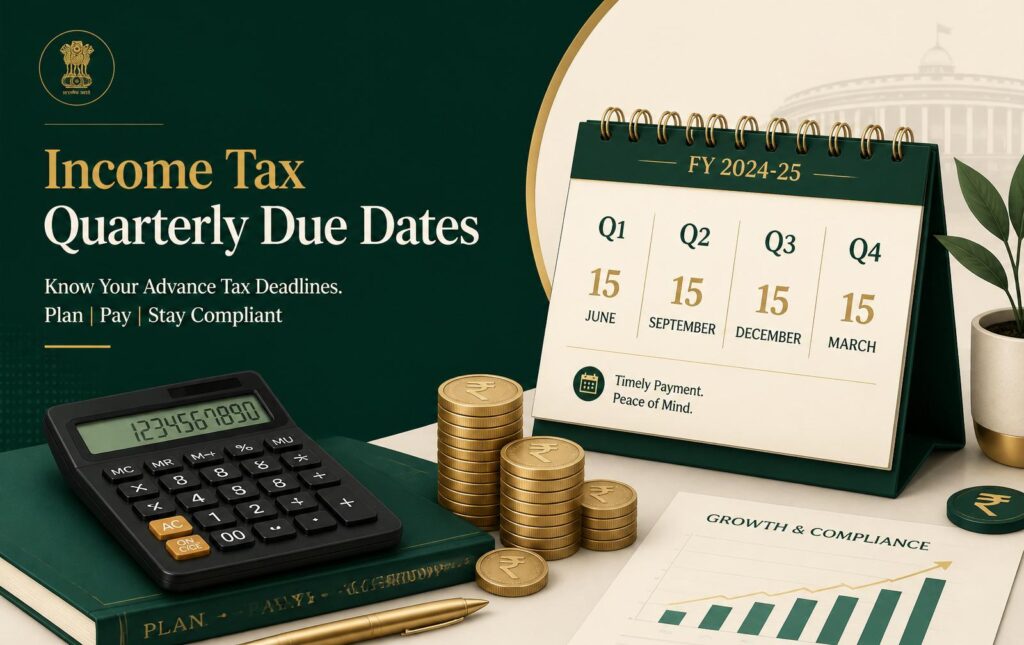
Advance tax calculation is one of those quiet rules that catches more people off guard than you'd expect. If a surprise interest charge has ever shown up while filing your return, this is usually the reason. Freelancers, business owners, landlords, and even salaried people with a side income from shares or fixed deposits — the rule pulls in a wider crowd than most realise.
Here's a clear, no-jargon breakdown of what it means, who it applies to, and how to work out the numbers without a spreadsheet meltdown.
What is Advance Tax?
At its simplest, advance tax is your income tax paid in instalments across the financial year, rather than as one big cheque at the end. It's often called the "pay-as-you-earn" scheme. The idea: if you're earning something that isn't already being taxed at source, the government wants its share as the money comes in — not in a mad scramble before the deadline.
What is Advance Tax?
The rule of thumb is easy to remember: if your total tax liability for the year — after subtracting the TDS already deducted — comes to more than ₹10,000, you're on the hook for advance tax. This covers salaried employees, self-employed professionals, freelancers, and businesses alike.
The one meaningful exception: resident senior citizens aged 60 and above, with no income from business or profession, are off the hook. The moment a senior citizen runs a business, the usual rules snap back into place. Advance Tax Due Dates for FY 2025-26 This covers salaried employees, self-employed professionals, freelancers, and businesses alike.
Advance tax is paid in four instalments, and each one builds on the last:
15 June 2025 — 15% of the estimated tax liability
15 September 2025 — 45% cumulative (less what's already paid)
15 December 2025 — 75% cumulative (less what's already paid)
15 March 2026 — 100% of the total liability
If you're registered under the presumptive scheme (Section 44AD or 44ADA) — common for small businesses and professionals like doctors, lawyers, and consultants — you get a simpler deal: pay the full amount in one shot by 15 March, no earlier instalments required.
One small but useful detail: when a due date falls on a weekend or public holiday, you can pay on the next working day without any penalty.
Advance Tax Calculation in 5 Simple Steps

The full advance tax calculation isn't complicated once you break it down:
Step 1 · Estimate your total income for the year
Add up everything you expect to earn — salary, business or professional income, rent, capital gains,
interest, dividends, and any other stream.
Step 2 · Deduct eligible exemptions and deductions
Take off Section 80C investments, health insurance under 80D, and anything else you can claim under
either the old or new tax regime.
Step 3 · Apply the applicable slab rates
Compute tax on your net taxable income using the current slab rates, then layer on surcharge (if it applies) and the 4% health and education cess.
Step 4 · Subtract TDS already deducted
If tax has been cut at source — from salary, bank interest, or elsewhere — take that off your total liability.
Step 5 · Check if the balance is over ₹10,000
If it is, you're liable for advance tax, split across the four instalments in the proportions above.
A Worked Example
Say your total estimated tax for the year lands at ₹1,00,000. Here's how the advance tax calculation
flows across the quarters:
What Happens If You Miss a Payment
Skipping or underpaying an instalment isn't the end of the world, but it does cost you. Two sections of the Income Tax Act deal with this:
Section 234B — kicks in if less than 90% of the total tax is paid by 31 March. Interest: 1% per month on the shortfall.
Section 234C — applies when any single instalment is underpaid, again at 1% per month on that quarter's shortfall.
There's a little breathing room built in — pay at least 12% by 15 June and 36% by 15 September, and
you generally escape Section 234C interest for those first two instalments, even if the amounts aren't exact.
Practical Tips from SNR TaxCare
Because advance tax rests on an estimate — and estimates drift — it helps to revisit your numbers
at every instalment rather than setting them in June and forgetting. This matters even more when
your income comes from freelance work, business, or capital gains, which tend to swing far more than
a fixed salary.
It's also worth remembering that any tax paid up to 31 March still counts as advance tax for that financial
year, so there's a small cushion right up to the deadline.
The point of a good advance tax calculation isn't perfect precision — it's staying close enough to your real liability that no interest charge can sneak up on you. A little planning each quarter goes a very long way.
Need help with your advance tax calculation?
please consult a tax professional or chartered accountant.
Related reads on SNR TaxCare
Ready to Get Started? Let's Talk Today
Looking for a reliable Tax Consultant in Visakhapatnam? Contact SNR TaxCare today for expert tax and compliance support.
- +91 996 666 5334
- +91 703 666 5334
- snrtaxcare5334@gmail.com
- Monday – Saturday: 9:00 AM – 7:00 PM