
Income Tax • Guide
Revised and Belated Return: 7 Smart Steps to File Safely
Missed the ITR deadline or noticed a slip in the numbers after hitting submit? A revised and belated return under the Income Tax Act gives you a proper second chance — here's the human, no-jargon walkthrough.

Table of Contents
1. What is a belated return?
2. What is a revised return?
3. Belated vs revised: the real difference
4. Deadlines you should not miss
5. Late fees, interest and losses
6. How to file — step by step
7. Common mistakes to avoid
FAQs
Revised and belated return — two words most of us hope we never need, and two words that quietly save thousands of taxpayers every year. Filing your income tax return on time is always the smart move, but life happens. You forget. A courier gets delayed. You realise your Form 16 was missing an entry. Good news: the law expects this, and there's a clean fix.
What is a belated return?
A belated return is simply an income tax return you file after the original due date. For most individual taxpayers that deadline is 31 July. If you missed it, don't panic — Section 139(4) of the Income Tax Act still lets you file, as long as you do it before 31 December of the relevant assessment year (or before your assessment is completed, whichever comes first).
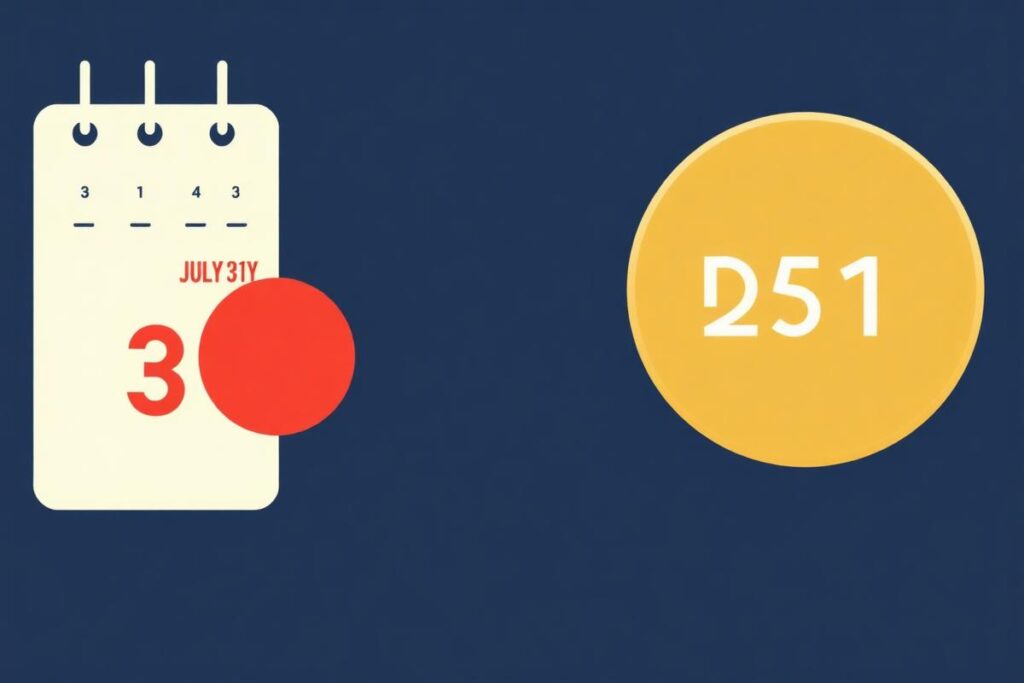
The two dates that decide whether your return is on-time, belated, or too late.
A few things worth knowing before you file late:
1. A late fee under Section 234F kicks in — up to ₹5,000 if your income crosses ₹5 lakh, and ₹1,000 if it stays below.
2. Interest under Section 234A can be charged on any tax that's still unpaid.
3. You lose the ability to carry forward most losses — business losses, capital losses — although loss from house property still travels forward with you.
What is a revised return?
A revised return, filed under Section 139(5), is your chance to correct a return you've already submitted — whether it went in on time or was itself a belated return. Think of it as an "undo" button for honest mistakes.
Most people revise their return because they:
1. Forgot income from a second job, savings interest, or freelance work
2. Missed a deduction they were entitled to
3. Typed the wrong bank account for the refund
4. Spotted a mismatch in TDS or personal details

You can revise your return as many times as you need before the deadline, but treat each attempt as the final one. Every revised return replaces the earlier one entirely — so double-check every figure before you submit. And the good part: there's no extra penalty just for revising, as long as you stay inside the December 31 window.
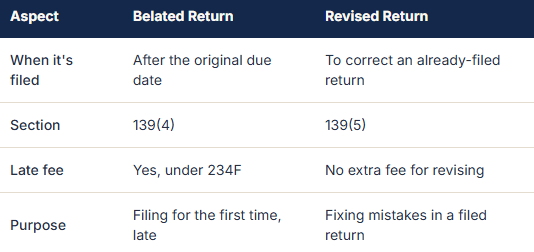
Belated vs revised: the real difference
Deadlines you should not miss
For both a belated and a revised return, the last date is 31 December of the relevant assessment year, or the day your assessment is completed — whichever comes first. Miss that, and your only option is an updated return (ITR-U), which comes with an additional tax outgo.
Late fees, interest and lost carry-forwards
Even though the law permits a revised and belated return, filing late has real costs. Late fees under 234F, monthly interest under 234A on unpaid dues, and — arguably the most painful — the inability to carry forward business or capital losses to future years. If you regularly trade in equity or run a small business, this alone is a strong reason to file on time.
How to file a revised and belated return — step by step
1. Log in to the Income Tax e-filing portal with your PAN and password.
2. Go to e-File → Income Tax Returns → File Income Tax Return.
3. Pick the correct Assessment Year and choose "139(4) – belated" or "139(5) – revised" as the filing type.
4. For a revised return, enter the acknowledgement number and date of your original filing.
5. Review every schedule — TDS, capital gains, deductions — and add anything you missed.
6. Pay any balance tax along with 234A/234F, then verify the return using Aadhaar OTP, net banking or
a signed ITR-V.
a signed ITR-V.
Common mistakes to avoid
Forgetting to select "revised" and accidentally filing a fresh original return.
Skipping the acknowledgement number of the original ITR.
Ignoring the 30-day e-verification window — an unverified return is treated as never filed.
Assuming a revised return erases penalties from the belated one. It doesn't.
Frequently asked questions
Can I file a revised return for a belated return?
Yes. Since AY 2017-18 you can revise a belated return, as long as it's done before 31 December of the assessment year.
Is there a limit on how many times I can revise?
Legally, no. Practically — keep it to one or two clean revisions to avoid triggering scrutiny.
What if I miss the December 31 window too?
You may still file an updated return (ITR-U) within 24 months, but with an extra 25%–50% tax on the additional liability.
Ready to Get Started? Let's Talk Today
Looking for a reliable Tax Consultant in Visakhapatnam? Contact SNR TaxCare today for expert tax and compliance support.
- +91 996 666 5334
- +91 703 666 5334
- snrtaxcare5334@gmail.com
- Monday – Saturday: 9:00 AM – 7:00 PM